
Precision Stamped Motorcycle Covers | Shih Yeh Metal Parts
Shih Yeh manufactures precision stamped motorcycle covers, shields, and guards with advanced surface treatments. 36 years expertise in metal stamping and finishing.
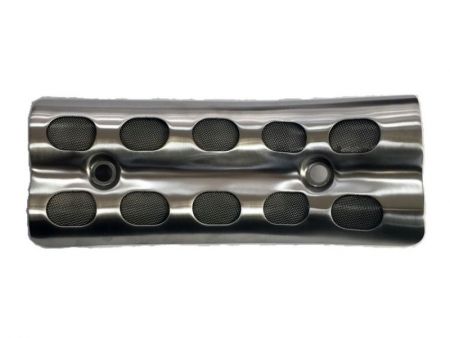


Custom Metal Motorcycle Covers, Shields & Guards
Complex metal forming and surface finishing for motorcycle cosmetic and protective components
with experience in complex stamped geometries and appearance-critical parts. Forming control focuses on reducing wrinkling, distortion, and cracking while maintaining dimensional and profile requirements for proper fit with mating components.
Available manufacturing capabilities include metal stamping, riveting, spot welding, TIG and MIG welding, together with multiple surface finishing options for different appearance and application requirements. Actual material, geometry, tolerances, assembly method, and surface specifications are evaluated according to customer drawings and project requirements.
Case Specifications and Procurement Considerations
| Item | Details |
|---|---|
| Product Type | Metal covers, trim panels, heat shields, protective covers, guards, and related appearance / protective metal components for heavy motorcycles |
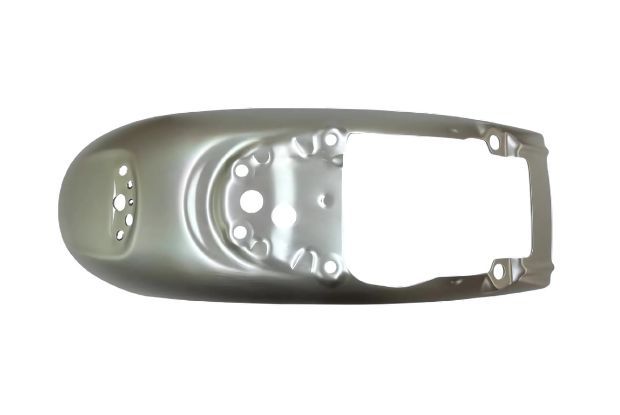
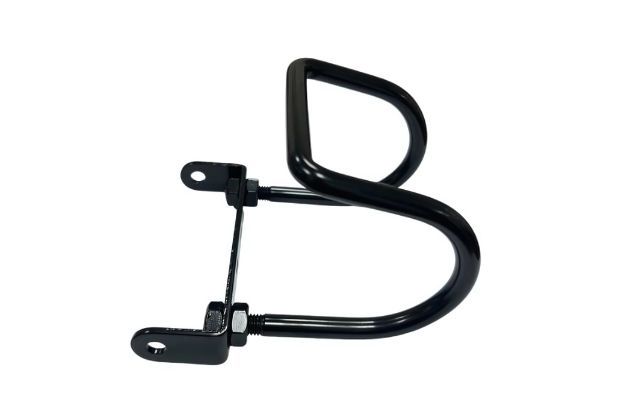
| Part Types | Exhaust heat shields, engine side covers, chain guards, radiator guards, body side covers, skid plates, decorative panels, and perforated / mesh guards |
| Customer Type | Motorcycle aftermarket parts brands and OEM project customers |
| Manufacturing Model | Manufacturability evaluation, tooling development, prototyping, and mass production based on customer 2D / 3D drawings |
| Material Experience | Steel, stainless steel, aluminum alloy, and copper |
| Main Structural Features | Large shallow curved surfaces, localized deep contours, double-curved / compound surfaces, asymmetric shapes, curved surfaces combined with flanges / bends, mounting tabs, and multi-piece assemblies |
| Main Processes | Stamp forming, riveting, spot welding, TIG / MIG welding, and screw fastening; deep drawing / drawing, punching, bending, and accessory processing are evaluated according to the part design |
| Key Manufacturing Challenges | Wrinkling, tearing, springback, profile deviation, localized distortion, bending and accumulated dimensional variation, post-weld distortion, accessory positioning, and dimensional control after assembly |
| Assembly Considerations | Mounting-hole locations, bracket positions, and assembly-related dimensions are confirmed according to customer drawings and mating-part conditions |
| Appearance Requirements | Control of dents, scratches, forming marks, weld marks, and localized surface irregularities; exposed edges may be deburred, rounded, flanged, hemmed, or otherwise treated according to the design |
| Surface Finishing | Polishing, sandblasting, anodizing, electrocoating, powder coating, liquid painting, electroplating, and other finishes, confirmed according to material and project requirements |
| Quality Verification | Appearance parts can be subject to 100% inspection according to project requirements; dimensions, assembly positions, and other inspection items are confirmed according to customer drawings and specifications |
| Packaging | EPE foam bags, bubble wrap, paper dividers, individual packaging, or additional protection may be evaluated according to appearance, surface finish, and deformation risks |
Complex Curved-Surface Forming and Springback Control
Motorcycle covers, trim panels, and guards often incorporate large shallow curved surfaces, localized deep contours, double-curved and compound surfaces, or asymmetric left-right geometries. These features may lead to wrinkling, tearing, material springback, profile deviation, or localized surface distortion during forming. Tooling design and process planning therefore need to be evaluated according to the part geometry and material characteristics.
Based on existing manufacturing experience, springback may require tooling correction or additional forming operations. Wrinkling, tearing, and localized distortion can sometimes be controlled by adjusting the process plan and forming sequence. The actual die structure, number of forming stages, and correction method still need to be confirmed according to the material, sheet thickness, contour depth, and drawing requirements.
Curved Surfaces, Flanges, and Accumulated Dimensional Control
Forming a curved surface followed by flanging or bending, or integrating local bends, mounting tabs, and bracket connections into the main body, is common in this type of component. When curved surfaces, bends, and fastening locations are combined in the same part, process control needs to consider not only individual bend angles but also post-forming springback, accumulated dimensions, the overall profile, and the final installation position.
Dimensional deviation from earlier stamping operations or subsequent bending may affect bracket assembly and final mounting positions. Process planning should therefore be evaluated according to part geometry, assembly datums, and the forming sequence. Where necessary, restriking or process adjustments may be used to reduce assembly risks caused by accumulated dimensional variation.
Multi-Part Assembly, Welding Distortion, and Accessory Position Control
Motorcycle covers and protective components are not always single stamped parts. They may also incorporate mesh panels, reinforcement plates, studs, nuts, mounting bases, internal brackets, or multiple sheet-metal components. Depending on the product structure, assembly methods may include riveting, spot welding, TIG welding, MIG welding, and screw fastening.
For thin sheet metal or Class A appearance surfaces, welding and assembly can create risks such as surface damage, local burn-through, out-of-tolerance accessory positions, or distortion of the main body. Depending on the condition, assembly fixtures, joining sequences, or additional straightening and restriking operations may be adjusted to control the position of brackets, fastening structures, and other accessories, as well as the overall dimensions and shape after assembly.
Mounting Position and Appearance-Surface Quality Control
These components often mount directly to the motorcycle frame, exhaust system, engine area, brackets, or other covers. Mounting-hole locations, bracket positions, and assembly-related dimensions are therefore important quality-control points. When a component contains multiple accessories, dimensional changes from forming, bending, and welding can accumulate progressively. As the number of attached components increases, fixture design and process control become increasingly important for maintaining final mounting positions.
Appearance parts also require attention to dents, scratches, forming marks, weld marks, and localized surface irregularities on primary visible surfaces. Exposed edges may require deburring, edge rounding, flanging, hemming, or other treatments according to the drawing. Before polishing, sandblasting, anodizing, electroplating, painting, or other surface finishing, the substrate condition should also be checked so that forming or welding defects are not made more visible by the subsequent finish.
Appearance parts can be subject to 100% inspection according to project requirements. Packaging is evaluated according to the surface condition and deformation risk, with options such as EPE foam bags, bubble wrap, and paper dividers. Parts that are more susceptible to deformation may be individually packed or provided with additional protection as required.
Extended Applications
The experience described above in curved-surface forming, flanging, multi-part assembly, welding-distortion control, and appearance-surface treatment can also be evaluated for other metal components with similar structures and manufacturing conditions, including:
• Automotive and motorcycle parts: exhaust-system heat shields, body covers, side covers, decorative trim panels, protective guards, and other appearance-critical metal components.
• Bicycles and other transportation equipment: chain guards, metal guards, equipment covers, decorative parts, and bracket assemblies.
• Machinery and equipment: equipment enclosures, protective panels, operator-area metal panels, ventilation guards, and multi-piece housings.
• Marine and other equipment applications: metal covers, protective components, and decorative parts requiring curved surfaces, bending, assembly, surface finishing, and appearance-quality control.
Submit Drawings and Specifications for Manufacturing Evaluation
If your product has similar requirements for curved-surface forming, flanging, accessory assembly, welding, mounting positions, or appearance quality, please provide 2D drawings and an available 3D model, together with the material and material grade, sheet thickness, overall dimensions, critical curved surfaces, mounting-hole locations, bracket positions, assembly datums, dimensional tolerances, surface finish, and appearance requirements.
Shih Yeh will evaluate tooling, process configuration, mass-production feasibility, and quotation conditions according to the actual part structure and project requirements.
- Related Products
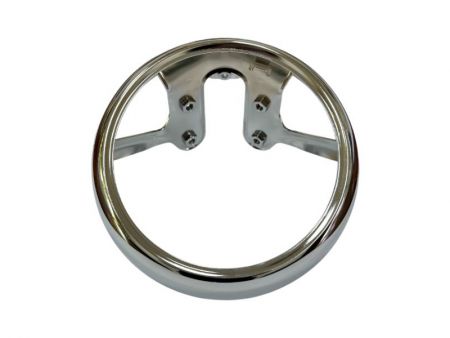
Deep-Drawn Steel & Bright Nickel-Chrome | Custom Motorcycle Headlight Rim
Shih Yeh develops and mass-produces custom motorcycle headlight rims based on customer-supplied...
Details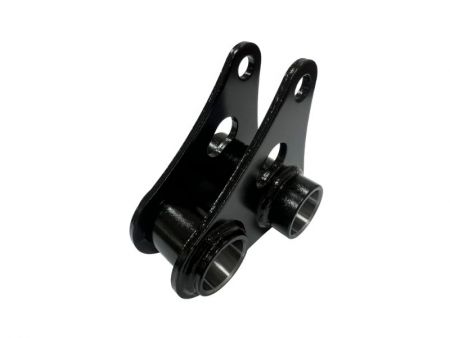
CNC Boring & E-Coating | Custom Motorcycle Drop Link
This custom motorcycle drop link is a welded steel suspension component manufactured with precision...
Details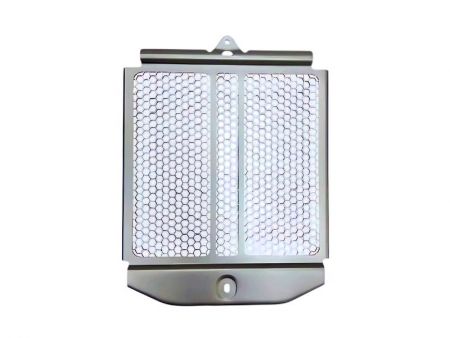
Hexagonal Mesh Punching & Flatness Control | Custom Aluminum Motorcycle Radiator Guard
Shih Yeh manufactures custom aluminum motorcycle radiator guards according to customer drawings....
Details- Related FAQ
When is tooling development the right choice for metal part manufacturing?
A professional evaluation of whether to use tooling or tooling-free sheet metal fabrication for metal part production is essential. The decision should...
What are the most effective burr removal methods for metal components?
Burr removal is a critical step in ensuring metal parts are safe to handle, reliable in use, and visually refined. At Shih Yeh, we understand that every...
Can You Manufacture Custom Sizes and Shapes from 2D/3D Drawings?
Yes. Shih Yeh can review customer-supplied 2D and 3D drawings for custom sizes, profiles, curved surfaces, hole locations, bending, deep drawing, welding,...
What Anodizing Colors, Coating Thicknesses, and Salt Spray Test Conditions Are Available for Aluminum Parts?
Shih Yeh can evaluate clear, black, gold, blue, red, and other specified anodized colors according to customer drawings and cosmetic requirements. Before...
What Is the Difference Between Fine Blanking and Conventional Stamping? Which Metal Parts Are Suitable for Fine Blanking?
Fine blanking is a stamping process used to improve the sheared-edge quality of metal parts. Compared with conventional stamping, it can increase the proportion...
Popular Products

How can you ensure your motorcycle covers and shields meet both strict dimensional tolerances and premium cosmetic standards while reducing production costs?
Shih Yeh's integrated precision stamping and surface treatment capabilities deliver motorcycle covers, shields, and guards that achieve exacting tolerances in linear, angular, and surface profiles while meeting the highest aesthetic standards. With an in-house tool room and 36 years of expertise in complex metal stamping, we eliminate costly outsourcing delays and maintain consistent quality in mass production. Our diverse finishing options—including chrome plating, powder coating, and anodizing—ensure your cosmetic components stand out in the market while reducing your overall component costs and time-to-market.
Beyond precision stamping, Shih Yeh offers comprehensive surface treatment and finishing solutions—including polishing, anodizing, sandblasting, electro-deposition coating, powder coating, wet painting, zinc plating, and chrome plating—that enhance both appearance and durability. Combined with multiple assembly methods such as riveting, spot welding, TIG welding, and MIG welding, we deliver cosmetic metal parts that meet the highest visual standards expected in motorcycle and power sports applications. Our in-house tool room eliminates outsourcing delays, reducing costs and turnaround times while maintaining strict quality control standards for every component.