
What Anodizing Colors, Coating Thicknesses, and Salt Spray Test Conditions Are Available for Aluminum Parts?
Shih Yeh can evaluate clear, black, gold, blue, red, and other specified anodized colors according to customer drawings and cosmetic requirements. Before anodizing, parts may also be polished, brushed, or sandblasted to achieve different metallic textures and surface effects.
Actual color, coating thickness, gloss, texture, and corrosion-resistance requirements must be confirmed according to the material condition, pretreatment, part geometry, service environment, and customer-approved sample. These services are part of a custom aluminum surface-treatment solution and do not mean that the same color, thickness, or salt spray test conditions apply to every product.
What Anodizing Colors Are Available?
Shih Yeh has manufacturing experience with:
• Clear anodizing
• Black anodizing
• Gold anodizing
• Blue anodizing
• Red anodizing
• Other specified colors
The final appearance of a color can vary with the aluminum alloy, material batch, surface pretreatment, part geometry, coating thickness, and process conditions. For this reason, screen colors or general color charts should not be treated as the final acceptance standard.
Before mass production, color and color variation are confirmed against a customer-approved sample. For parts with critical cosmetic surfaces, it is recommended to provide an appearance sample, color reference, or previously approved part as the basis for sampling and production inspection.
Which Surface Pretreatments Can Be Applied Before Anodizing?
The following pretreatments can be evaluated according to the customer drawing and cosmetic requirements:
| Pretreatment | Typical Surface Effect |
|---|---|
| Polishing | Improves surface smoothness and gloss |
| Brushing | Creates a directional metallic texture |
| Sandblasting | Creates a more uniform matte appearance |
Pretreatment affects not only appearance, but also the final texture, gloss, and color after anodizing. Scratches, pressure marks, welding marks, machining lines, or local surface unevenness created earlier in production may become more visible after anodizing.
For cosmetic parts, surface quality should therefore be managed from material handling and machining through pretreatment, anodizing, and final inspection.
What Anodizing Thickness Can Be Produced?
Anodizing thickness must be confirmed according to the product application, cosmetic requirement, service environment, and customer specification.
Shih Yeh has produced standard anodizing projects with reference thicknesses of approximately 3 μm to 15 μm.
For projects requiring a coating thickness above 30 μm, hard anodizing can be evaluated, and Shih Yeh has relevant manufacturing experience.
The choice between standard and hard anodizing should consider:
• Part application
• Wear-resistance requirements
• Corrosion-resistance requirements
• Dimensional tolerances
• Required color
• Surface roughness
• Assembly relationships
Actual coating thickness and acceptance criteria are confirmed according to the customer drawing and project specification. The ranges above reflect previous project experience and do not represent a fixed guarantee for every alloy, geometry, or color.
How Are Salt Spray Test Conditions Determined for Anodized Aluminum Parts?
There is no fixed salt spray test duration that applies to every anodized aluminum part. The actual test conditions must be confirmed according to the customer's requirements, test method, product application, and service environment. A single test duration should not be used to represent the corrosion resistance of all anodized aluminum parts.
Shih Yeh has completed a mass-production project with a 240-hour salt spray test requirement. For outdoor cosmetic parts such as aluminum motorcycle fenders, the actual corrosion-resistance requirements still need to be confirmed according to the service environment, anodizing type, coating thickness, sealing conditions, and customer-specified test standard.
The 240-hour result is a reference case specification. It does not mean that all anodized parts use or are guaranteed to achieve the same conditions. For a new project, the following items should be confirmed:
• Test duration
• Test method
• Test standard
• Anodizing type and coating thickness
• Sealing requirements
• Evaluation criteria
• Acceptance limits
• Report format
Salt spray testing is conducted according to customer requirements, and a test report can be provided depending on the project. For buyers with specific corrosion-resistance requirements, it is recommended to provide a complete test specification before quotation and sampling rather than using only the number of test hours as the acceptance basis.
For aluminum parts requiring clear, black, gold, specified blue, red, or other specified anodized colors, together with polishing, brushing, sandblasting, standard anodizing, or hard anodizing, please provide the drawing, material, cosmetic requirements, coating thickness, sealing requirements, and test specification. Shih Yeh can evaluate the surface-treatment, sampling, approved-sample, and mass-production plan according to the product application and project conditions.
- Related Case
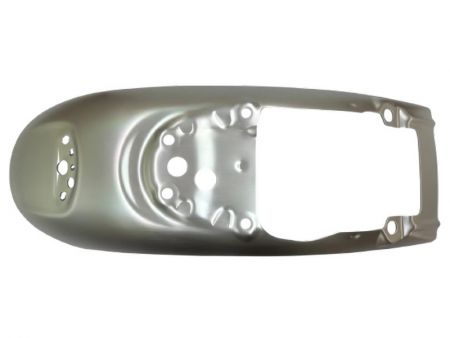
3D Curved Forming & Cosmetic part Production | Custom Aluminum Mudguard
Shih Yeh provides OEM manufacturing services for custom aluminum front and rear motorcycle...
Details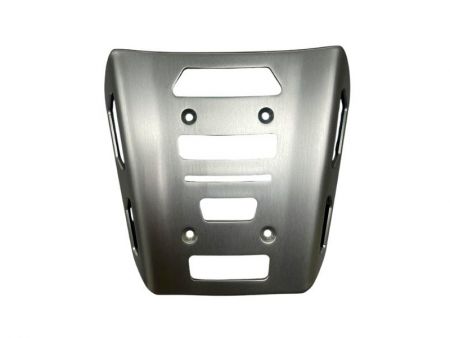
4mm Aluminum Fine Blanking and Cosmetic Part | Custom Motorcycle Luggage Rack
This aluminum motorcycle luggage rack is a custom mass-produced part for motorcycle brands...
Details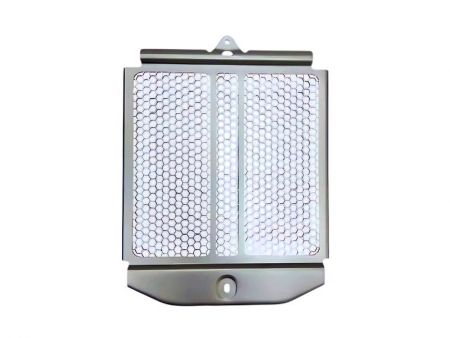
Hexagonal Mesh Punching & Flatness Control | Custom Aluminum Motorcycle Radiator Guard
Shih Yeh manufactures custom aluminum motorcycle radiator guards according to customer drawings....
Details