
Shih Yeh | Custom Aluminum Motorcycle Fender Stamping
Shih Yeh manufactures precision aluminum motorcycle fenders with 3D curved forming, Class-A cosmetic surfaces, and anodized finishes for OEM mass production.
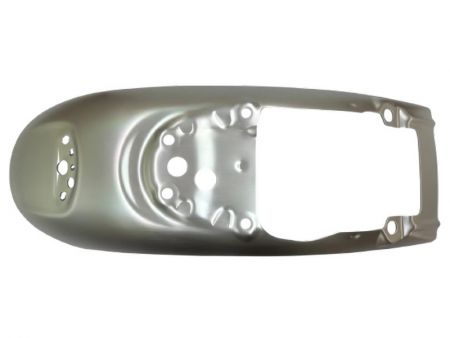
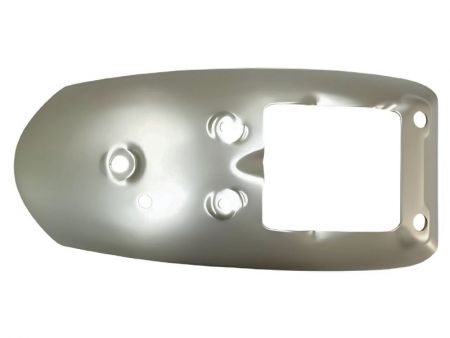
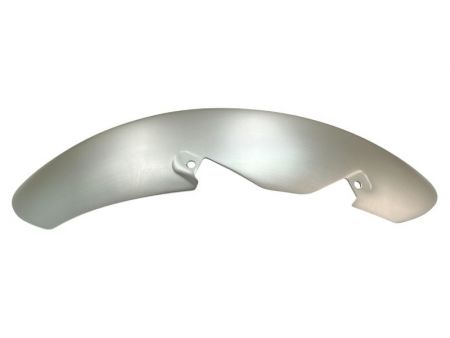
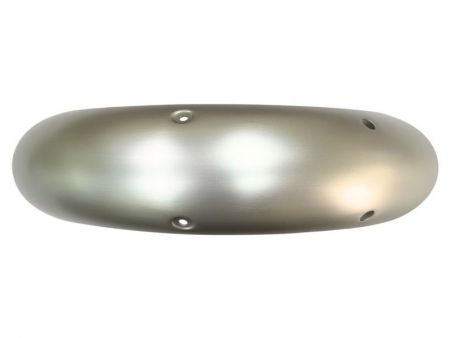
3D Curved Forming & Cosmetic part Production | Custom Aluminum Mudguard
Stable OEM Production with Profile, Mounting-Hole, and Anodized Finish Control
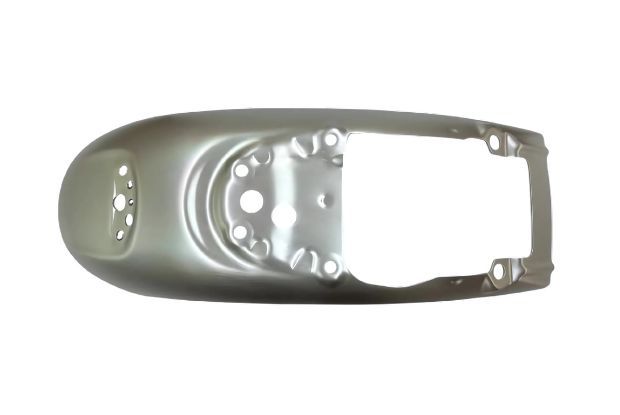
Shih Yeh provides OEM manufacturing services for custom aluminum front and rear motorcycle fenders for motorcycle brands and aftermarket parts companies in Europe and the United States. This mass-produced part uses 2 mm aluminum alloy and combines long 3D curved surfaces, outer-profile requirements, mounting-hole locations, a front return flange, and Class-A cosmetic surfaces. Shih Yeh supports manufacturability evaluation, tooling and process development, sampling, mass production, surface treatment, quality documentation, and export. Customer 2D/3D drawings are converted into physical parts that can be inspected, produced consistently, and delivered on an ongoing basis. Multiple sizes and designs have entered production, passed customer dimensional and cosmetic approval, and continue to be exported to European and U.S. markets.
Custom Aluminum Motorcycle Fender Mass Production Case Summary
| Item | Details |
|---|---|
| Product Type | Custom aluminum motorcycle front and rear fenders |
| Target Market | Europe and the United States |
| Customer Type | Motorcycle brands and aftermarket parts brands |
| Manufacturing Model | Developed from customer 2D/3D drawings for OEM mass production |
| Project Status | Development completed and in stable mass production |
| Material | Aluminum alloy |
| Reference Thickness | 2 mm |
| Reference Dimensions | Multiple sizes and designs in production; maximum rear-fender size approximately 550 × 200 × 110 mm |
| Main Structural Features | 3D curved surfaces, curve and surface-profile tolerances, central styling openings on selected designs, mounting holes, and front return flange |
| Main Processes | Curved forming, punching, drilling, brushing, and anodizing |
| Surface Requirements | Class-A cosmetic surfaces, specified brushing direction, and project-specific anodizing |
| Inspection Flow | First-article inspection, in-process inspection, and outgoing inspection |
| Available Documents | Outgoing inspection report, dimensional inspection record, material certificate, salt spray test report, and PPAP |
| Project Service Scope | Manufacturability evaluation, tooling and process development, sampling, mass production, surface treatment, quality documentation, and export |
The thickness and dimensions shown above are reference specifications from existing mass-produced products. They do not mean that the same conditions apply to every custom aluminum curved part. Actual manufacturability must be confirmed according to product size, curvature, opening structure, tolerances, and cosmetic requirements.
Mass Production Challenges of 3D Curved Aluminum Motorcycle Fenders
A motorcycle fender is not a simple arc or a conventional bent part. The product has continuous curvature changes in both the longitudinal and transverse directions. In addition to basic dimensions, the outer-edge curve profile, central curved surface, and overall 3D geometry must remain consistent.To control overall twist and warpage, long curved parts may develop overall twisting, warpage, or local high and low areas on the central surface during forming and subsequent processing. These changes alter the intended 3D geometry and may also affect the outer profile and mounting positions.
For curve-profile and surface-profile accuracy, mass production requires control not only of basic dimensions, but also of curve profiles, surface profiles, and the outer edge relative to the drawing. Unstable forming conditions or material condition may cause curve-profile deviation, surface-profile deviation, or outer edges that shift away from the specified contour.Curved-surface variation can also affect mounting holes. The curved surface, outer profile, local structures, and mounting holes are geometrically linked. When the overall surface condition changes, the position of mounting holes relative to drawing datums may also change. Quality evaluation therefore cannot focus only on a single dimension or local area; the complete 3D geometric relationship of the part must be confirmed.
Multiple sizes and designs are already in production, with a maximum rear-fender reference size of approximately 550 × 200 × 110 mm. Each new design still requires separate evaluation based on curvature, forming depth, local structures, and tolerance requirements.
Mass Production Challenges of Large Openings and Mounting-Hole Punching
Some fender designs include a large central opening and multiple mounting holes. Removing a large amount of material from the center reduces overall stiffness, making it more difficult to maintain the relationship among the original curved surface, outer profile, opening edge, and mounting-hole locations.
Common issues include:
• Deformation of the central curved surface after the opening is formed
• Warpage or twisting caused by reduced part stiffness
• Shift of the opening edge relative to the overall outer profile
• Mounting-hole displacement caused by curved-surface variation
• Hole spacing that no longer matches drawing datums
• Accumulated deviation across multiple holes
• Burrs that affect assembly and appearance
Quality cannot be judged only by individual hole diameters or spacing. The overall geometric relationship among the central opening, central curved surface, outer profile, and mounting holes must be evaluated together. Even when a single hole meets its requirement, any shift in the surface or outer profile may still prevent the finished part from meeting assembly and cosmetic standards.
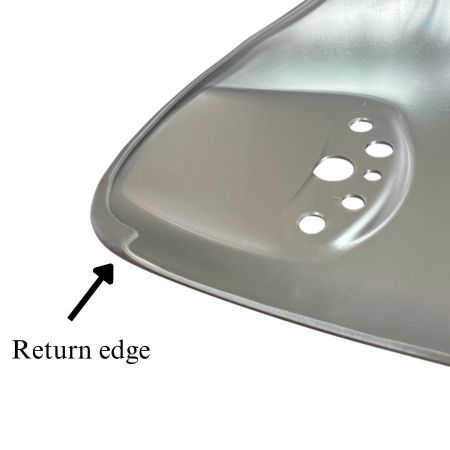
Forming Stability of the Aluminum Curved Front Return Flange
The front edge includes an inward return flange formed along the existing 3D curved surface. Unlike a conventional bend in flat sheet, this local forming operation can affect the already-formed main surface and front-end profile.
Key manufacturing risks include:
• Cracking in the return-flange area
• Inconsistent return-flange height
• Front-profile displacement
• Local surface unevenness
• Pressure marks, scratches, or local tearing
• Deformation of the main curved surface caused by the return flange
The result is also influenced by edge length, material condition, semi-finished-part positioning, and production conditions. Inspection cannot focus only on whether the return flange has been formed; the overall curved surface, outer profile, and Class-A cosmetic surface must also meet the drawing and customer-approved standard.
Using Dedicated Fixtures and CMM Validation to Confirm Curved Profiles and Mounting Holes
For long 3D curved parts, measuring only a few individual points cannot fully represent the actual outer profile or central curved surface. Mass-production quality control must therefore include the geometric relationship among the curved surface, outer profile, and mounting holes.
During fixture development and verification, a coordinate measuring machine is used to validate the fixture and confirm that its datums are consistent with the product drawing. During production, the validated fixture is used to quickly check the outer-edge profile, central curved-surface profile, and mounting-hole-related dimensions.
The outer profile, central curved surface, and mounting-hole dimensions are sampled with the dedicated fixture to improve inspection efficiency and maintain consistent judgment. Actual sampling frequency, acceptance criteria, and inspection methods are confirmed according to the customer drawing and project quality specification.
Brushing Quality Control for Class-A Aluminum Motorcycle Fenders
A motorcycle mudguard is not only a functional component; it is also a highly visible exterior part. In addition to dimensional and curved-surface requirements, the product must pass the brand owner's Class-A cosmetic approval.
Inspection focuses on:
• Brushing direction and texture uniformity
• Cross-grain or irregular sanding marks
• Scratches, dents, and pressure marks
• Local surface unevenness
• Color after anodizing
• Burr quality
Class-A cosmetic surfaces and burrs are fully inspected against the customer-approved sample and project cosmetic standard. Cosmetic inspection is performed under controlled lighting, viewing distance, and inspection time to reduce variation caused by different inspectors and environments.
Anodizing cannot completely hide substrate defects. Scratches, pressure marks, uneven polishing, or local surface variation created in earlier processes may become more visible after finishing. Cosmetic quality must therefore be controlled continuously from forming and handling through brushing and anodizing.
Clear and Colored Anodizing for Aluminum Motorcycle Fenders
The mass-produced product uses bright clear anodizing combined with a specified brushing direction, retaining the natural metallic texture of aluminum while improving corrosion resistance. In addition to clear anodizing, Shih Yeh has experience producing black, gold, and royal-blue anodized parts. Other colors can be evaluated according to the customer's brand design and cosmetic requirements. Actual color, brightness, gloss, and acceptance criteria must be confirmed based on material condition, pretreatment, product geometry, and customer-approved samples.
Important cosmetic surfaces after anodizing must be checked for:
• Blistering, pits, or obvious roughness
• Cracks or incomplete anodized areas
• Contamination, discoloration, or obvious color abnormalities
• Scratches and impact damage
After surface treatment, parts must remain clean and be properly protected to reduce cosmetic damage during handling, packaging, and export transportation. This mass-production project includes a 240-hour salt spray test requirement, and a salt spray test report can be provided according to project needs. This value is a reference case specification and does not mean that all custom aluminum parts use the same test conditions. Anodizing and corrosion-resistance requirements for new projects must still be confirmed according to customer drawings, actual service environment, and quality specifications.
Related Custom Aluminum Curved-Part Applications
This mass-production experience is not limited to motorcycle fenders. It may also be applied to other aluminum parts with complex curved surfaces, central openings, local return flanges, or high cosmetic requirements, including:
• Motorcycle metal covers and curved body trim panels
• ATV/UTV curved body guards and motorcycle exhaust heat shields
• Metal protective parts for special-purpose vehicles
• Curved equipment covers and arched guards for automated machinery
• Cosmetic aluminum parts for medical equipment
• Curved housings for electronic and communication equipment, and metal instrument panels
• Weather-resistant aluminum covers for outdoor equipment
• Curved covers for charging or energy equipment
• Aluminum protective parts for marine equipment
• Cosmetic aluminum parts with large openings, return flanges, or a specified brushing direction
Although these products serve different industries, they may share similar mass-production challenges, including control of long 3D curved surfaces, overall twisting, curve-profile and surface-profile deviation, reduced stiffness caused by large openings, mounting-hole accuracy, and substrate appearance requirements after anodizing.
Do You Have Similar Curved-Forming, Cosmetic, or Mass-Production Stability Requirements?
This motorcycle-fender case demonstrates the manufacturing challenges created when long 3D curved surfaces, overall profiles, large openings, mounting holes, local return flanges, and Class-A cosmetic surfaces exist in the same part. For products with similar curved-forming, cosmetic-quality, or production-consistency requirements, please provide 2D/3D drawings, material, thickness, critical dimensions, tolerances, and surface-treatment requirements. Shih Yeh can evaluate manufacturability, sampling, and mass-production options according to the project conditions.
- Related Products
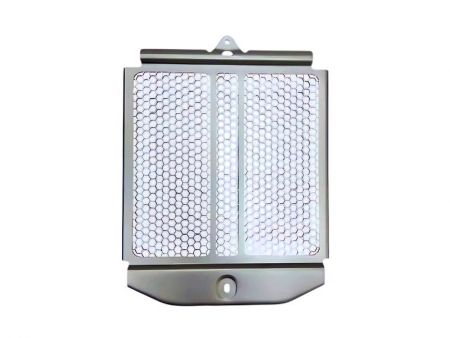
Hexagonal Mesh Punching & Flatness Control | Custom Aluminum Motorcycle Radiator Guard
Shih Yeh manufactures custom aluminum motorcycle radiator guards according to customer drawings....
Details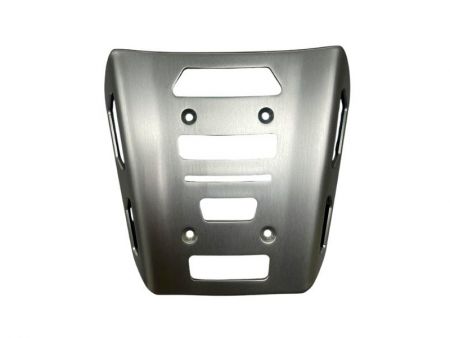
4mm Aluminum Fine Blanking and Cosmetic Part | Custom Motorcycle Luggage Rack
This aluminum motorcycle luggage rack is a custom mass-produced part for motorcycle brands...
Details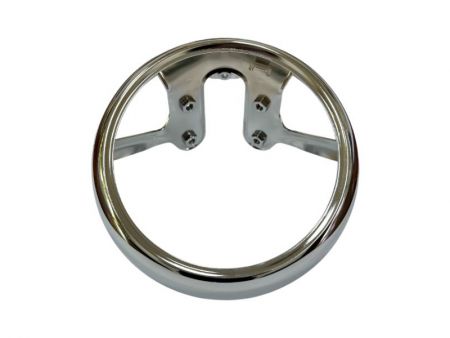
Deep-Drawn Steel & Bright Nickel-Chrome | Custom Motorcycle Headlight Rim
Shih Yeh develops and mass-produces custom motorcycle headlight rims based on customer-supplied...
Details- Related FAQ
Can You Manufacture Custom Sizes and Shapes from 2D/3D Drawings?
Yes. Shih Yeh can review customer-supplied 2D and 3D drawings for custom sizes, profiles, curved surfaces, hole locations, bending, deep drawing, welding,...
What Anodizing Colors, Coating Thicknesses, and Salt Spray Test Conditions Are Available for Aluminum Parts?
Shih Yeh can evaluate clear, black, gold, blue, red, and other specified anodized colors according to customer drawings and cosmetic requirements. Before...
Popular Products

How can you ensure consistent quality and cosmetic approval for mass-produced aluminum motorcycle fenders across multiple designs and export markets?
Shih Yeh's 36-year expertise in precision aluminum stamping includes dedicated quality control for 3D curved surfaces, outer-profile consistency, mounting-hole accuracy, and Class-A cosmetic finishes. Our in-house tool room develops custom fixtures validated with coordinate measuring machines, while strict inspection protocols—first-article, in-process, and outgoing—maintain consistency across production runs destined for European and U.S. markets. We provide complete documentation including dimensional inspection records, material certificates, salt spray test reports, and PPAP compliance to support your brand's quality standards.
Beyond motorcycle fenders, our curved aluminum forming and stamping capabilities extend to medical equipment housings, industrial machinery protective covers, ATV/UTV body guards, marine equipment panels, and electronic equipment enclosures—any application requiring complex 3D geometry, large central openings, return flanges, and anodized surface finishes. Our in-house tool room enables rapid tooling development and fixture validation using coordinate measuring machines to ensure outer-edge profiles, central curved surfaces, and mounting-hole relationships meet exact specifications. Whether you require bright clear anodizing or alternative colors (black, gold, royal-blue), 240-hour salt spray corrosion testing, and controlled brushing directions, Shih Yeh's comprehensive manufacturing and quality infrastructure delivers high-precision aluminum components that pass dimensional inspection, cosmetic approval, and assembly requirements. Contact our team today to discuss your custom aluminum stamping and curved-forming project specifications.